August 18, 2026
What To Do If You’re Locked Out
August 18, 2026
Anti-Snap Locks Explained
August 18, 2026
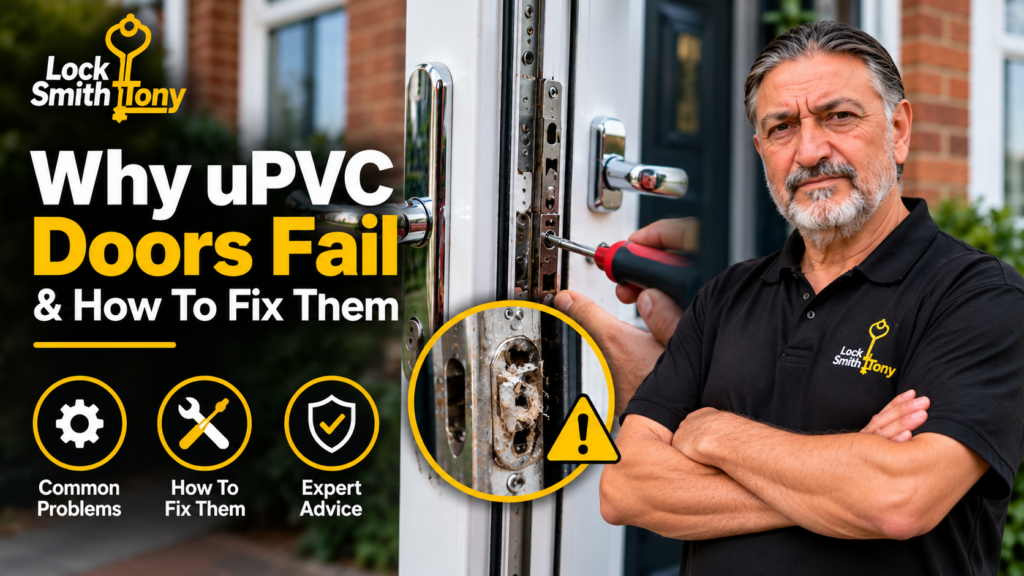
uPVC doors are popular because they’re secure, practical and relatively low maintenance. However, the locking mechanism inside a uPVC door is more complicated than a standard lock, and over time several parts can wear, move out of alignment or fail.
If your uPVC door is becoming difficult to lock, it’s worth dealing with the problem early. Continuing to force the handle or key can turn a relatively straightforward repair into a more expensive problem.
One of the most common causes is door misalignment. Over time, a door can drop slightly on its hinges. This means the hooks, rollers and locking points no longer line up correctly with the keeps in the frame.
You may notice that you have to lift the handle particularly hard, push or pull the door while turning the key, or repeatedly try before the door locks.
Another common problem is failure of the multipoint locking mechanism. This is the long mechanism running inside the edge of many uPVC doors. Internal components can become worn or damaged after years of use.
The euro cylinder can also develop faults. If the key is becoming difficult to turn, sticking or spinning without operating the lock correctly, the cylinder or another part of the locking system may need attention.
Often, yes.
A faulty uPVC door does not automatically mean that you need a completely new door. Depending on the problem, a locksmith may be able to realign the door, adjust the keeps, replace the cylinder or repair or replace the multipoint locking mechanism.
The important thing is identifying the actual cause before replacing parts unnecessarily.
Pay attention if:
Ignoring these warning signs can eventually leave you unable to lock—or unlock—the door.
Lock Smith Tony provides uPVC door lock repairs, adjustments and replacement locking solutions in Harrow and surrounding areas.
If your door isn’t locking properly, getting it checked early can help prevent a complete lock failure.
Call Tony on 07500 926658 to discuss your uPVC door problem.